Calf pens for calf rearing
So that your calves feel completely comfortable in our calf pens
In the first few weeks of their lives, calves need a hygienic, safe and well-ventilated calf box. Our high-quality calf pens and calf crates from Topcalf meet all German requirements and are among the leading systems from renowned calf pen manufacturers. The robust design ensures optimum hygiene, easy cleaning and a healthy barn climate.
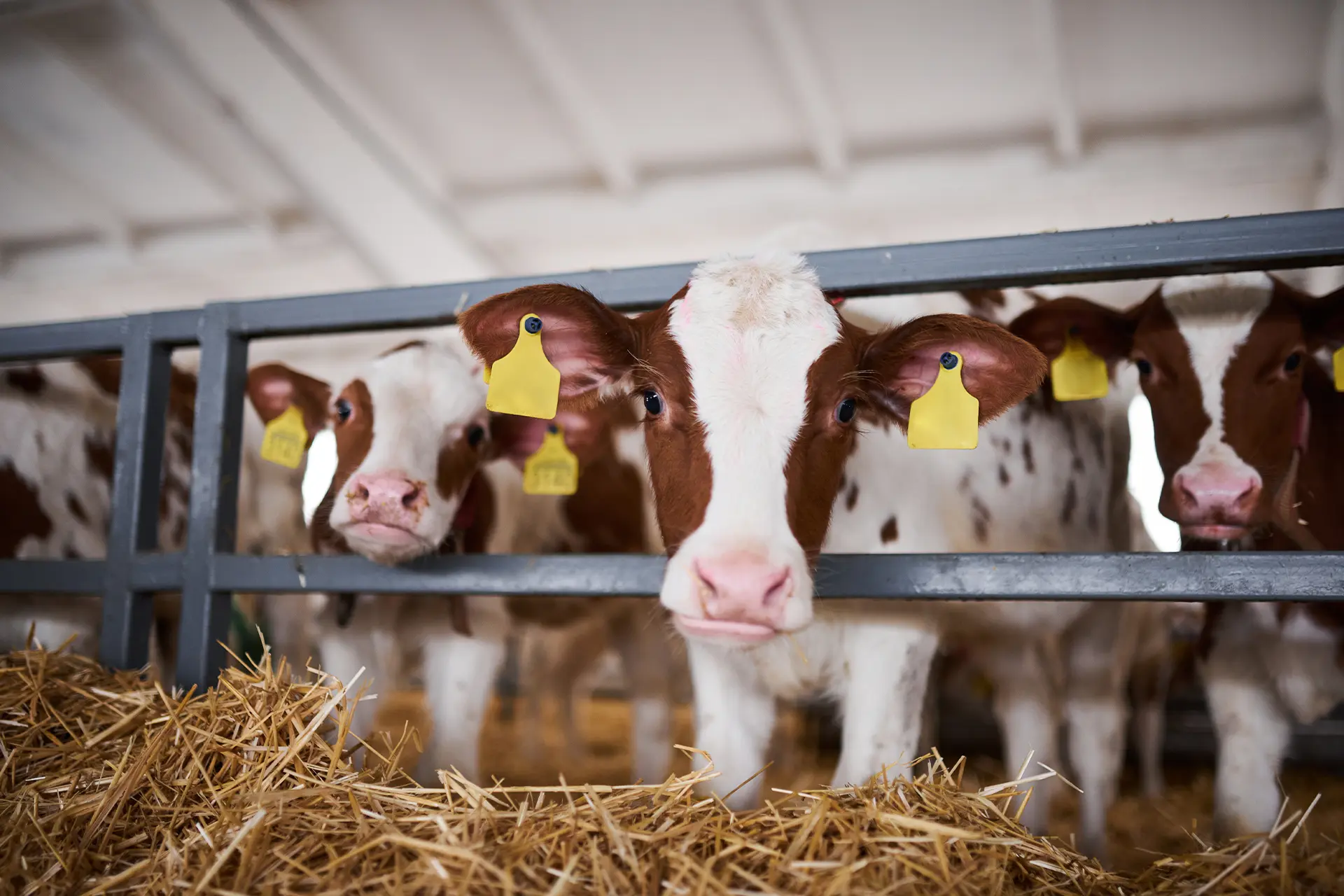
Optimal calf box for healthy calves – our indoor and outdoor solutions
As a premium partner of Topcalf, we are your reliable partner for high-quality calf pens in Germany (BY, BW, TH, SN), Austria and Italy.
Indoor calf pens
Our indoor calf pens provide a protected, warm and hygienic environment – ideal for the first few weeks of your calves’ lives. The modular calf penscan be flexibly integrated into any barn environment and are particularly easy to clean thanks to their smooth, robust plastic surfaces. They enable efficient and animal-friendly rearing, support individual care and promote a healthy environment for optimum growth of your calves.


Feeding & care
- 1 teat bucket with sturdy holder per calf
- 2 robust feed bowls per calf, safely secured against falling out
- Drinking and feeding accessories included
Hygiene & Health
- One-piece side, intermediate and rear panels for optimum hygiene management
- Removable, divisible plastic slatted shelf, loadable up to 200 kg
- Optionally with tilting shelf (EasyClean) for even faster cleaning
Security & stability
- Strong galvanized metal frame for maximum durability
- Locking device in the doors for quiet working
- Divided doors: animals remain safely in the box when opened
Practice-friendly & mobile
- All-round railing and collision protection for forklift pick-up
- Swivel wheels for flexible use in the barn
Our indoor calf box models at a glance
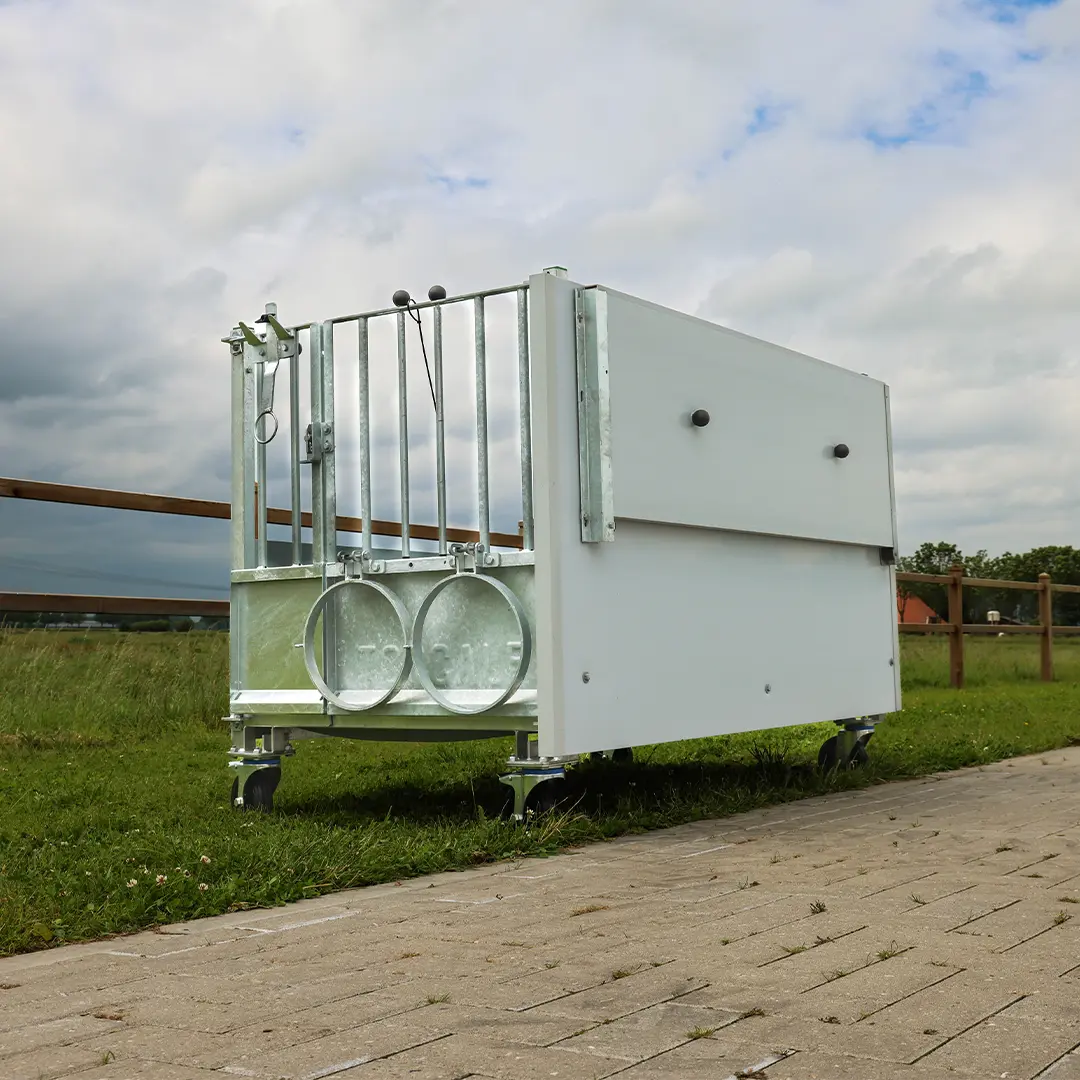
Mono XL - The optimum single calf box
Ideal for the intensive care of a single calf. The Mono XL offers maximum overview, optimum hygiene conditions and enables targeted, individual rearing.
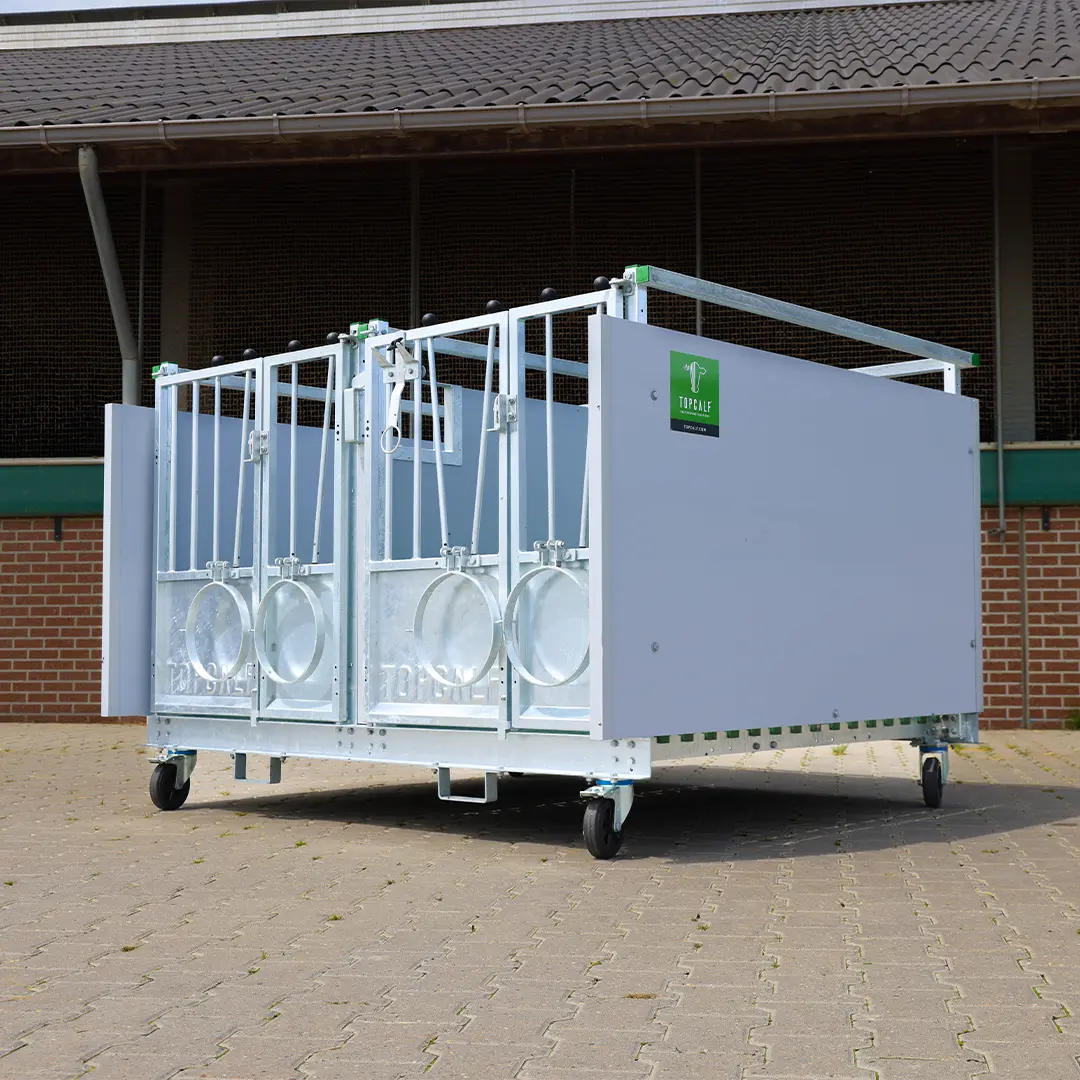
Duo XXL - The spacious calf box for two animals
Perfect for housing two calves. The Duo XXL creates sufficient space, promotes social contact and combines comfort with a hygienic and well-structured environment.
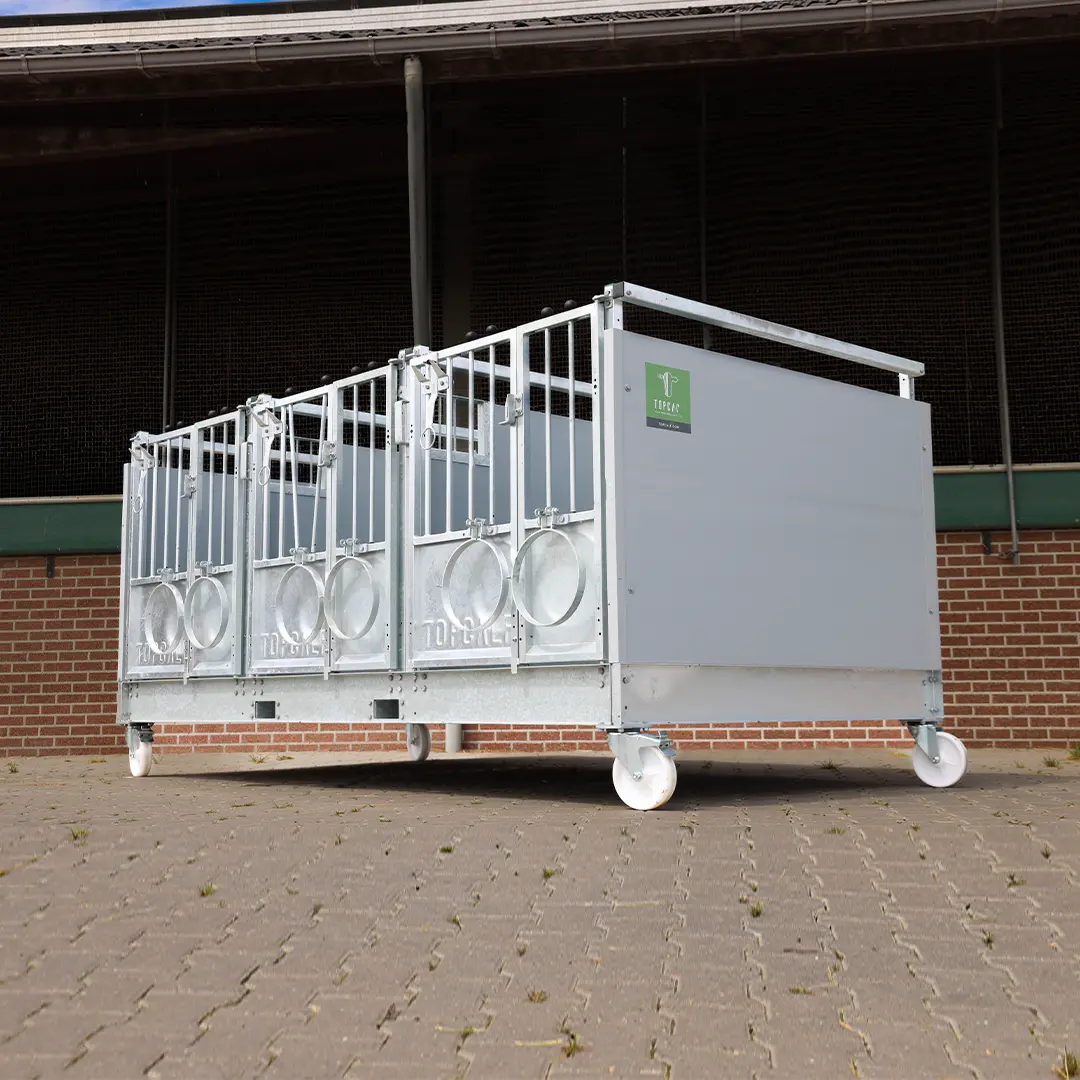
Trio XXL (without roof) - Flexible group housing for up to three calves
This spacious group calf box offers space for three calves and is ideal for early group housing. Ideal for farms that value robust, open and clearly laid out indoor housing solutions.
The perfect outdoor solution
Calf boxes for the little ones
Our outdoor calf hutches are a weatherproof and robust solution for keeping calves outdoors . These mobile calf hutches are easy to transport and offer protection from the weather. Just like the indoor calf hutches, they offer a variety of advantages depending on the design, whether for one calf or a larger group.
Feeding & care
- 1 teat bucket with holder per calf
- 2 feed bowls per calf, securely protected against falling out
- Divided doors for trouble-free drinking when opening
Hygiene & cleaning
- One-piece side, intermediate and rear panels for optimum cleanliness
- Removable slatted floor, loadable up to 200 kg
- Fast manure removal and uncomplicated cleaning
- Optional tilting floor with release mechanism for maximum labor savings
- Collecting trays for liquid manure incl. stainless steel connection piece
Protection & climate
- Insulated trapezoidal roof for protection from heat, rain and snow
- Optional wind protection net for even more comfort
- Optional: CAT3000® tube ventilation for calves, ensuring a perfect supply of fresh air
- Optional: calf blankets for additional warmth
Stability & mobility
- Strong galvanized metal for a long service life
- Front and rear forklift pick-up
- Easy to transport – even with a yard loader
- Two calf huts opposite each other form a sheltered calf village
Our outdoor calf box models at a glance
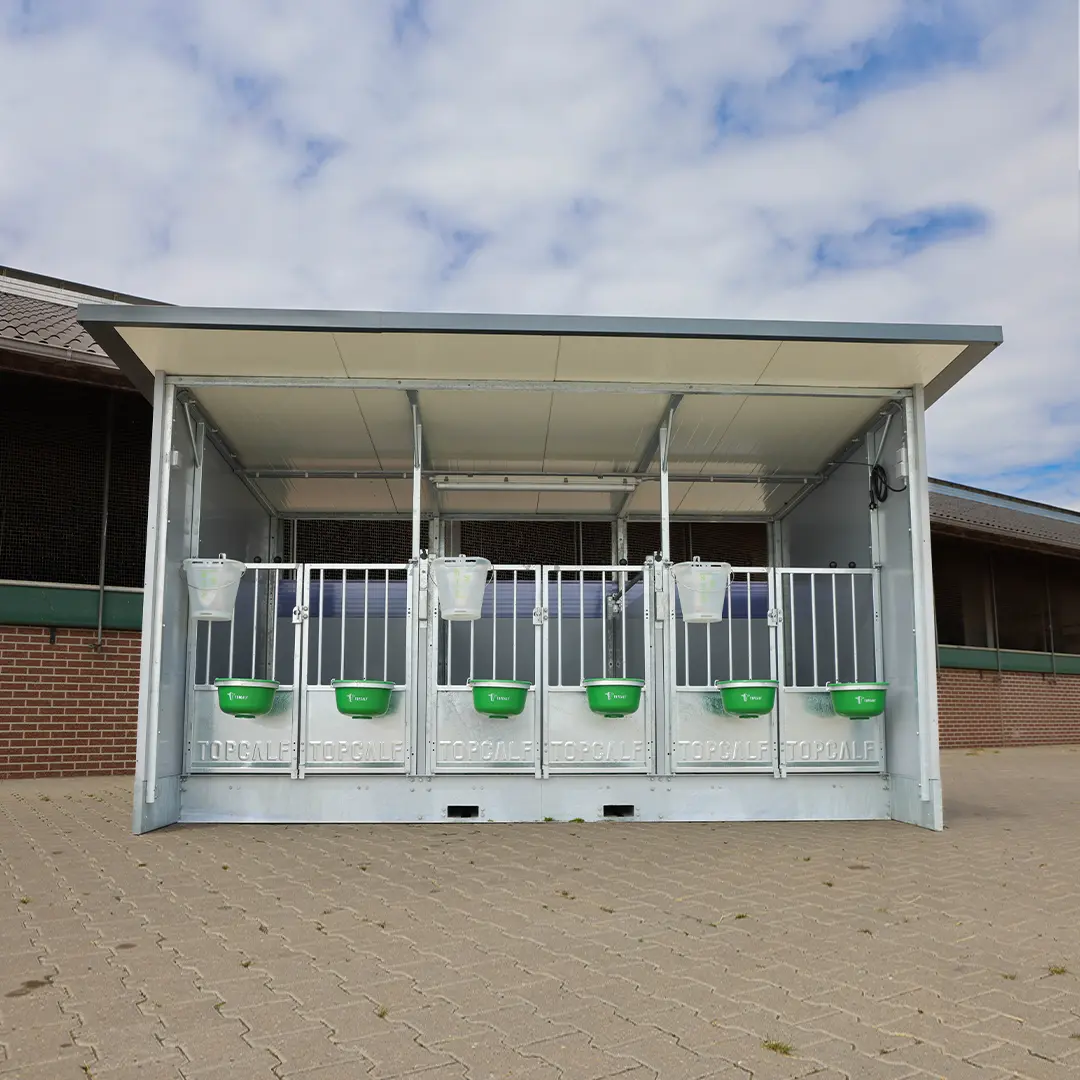
Trio XL
Plenty of space for up to three calves and optimum protection from rain and sun.
-
Optional accessories:
- Double hay rack (on partition wall)
- Windbreak net
- CAT3000® hose ventilation
- Calf blanket
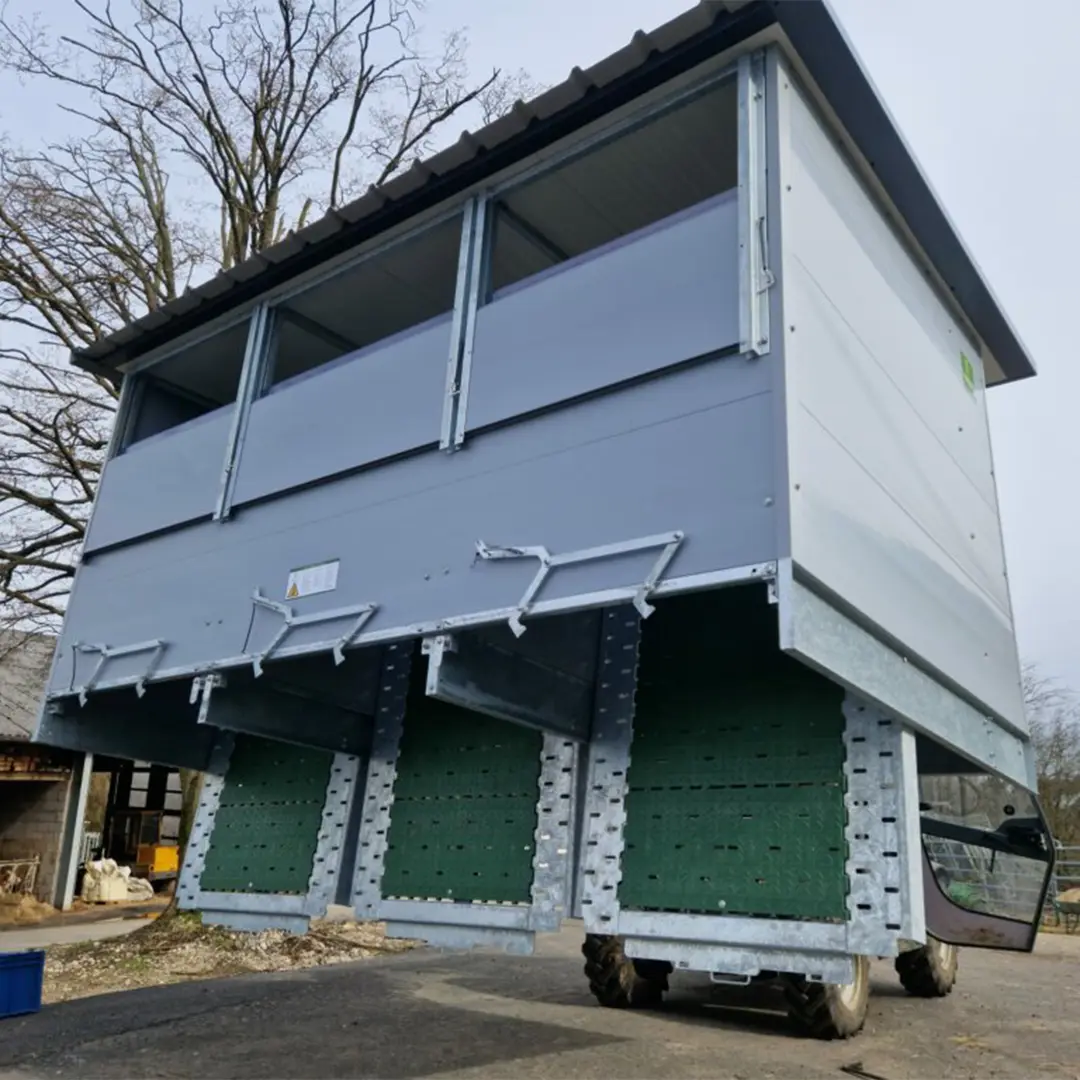
Trio XXL
Ideal for larger groups.
-
Optional accessories:
- Double hay rack (on partition wall)
- Windbreak net
- CAT3000® hose ventilation
- Calf blanket

Quattro XL
Particularly stable and Space for up to four calves
-
Optional accessories:
- Double hay rack (on partition wall)
- Windbreak net
- CAT3000® hose ventilation
- Calf blanket

Quinto XL
Particularly stable and Space for up to five calves
-
Optional accessories:
- Double hay rack (on partition wall)
- Windbreak net
- CAT3000® hose ventilation
- Calf blanket
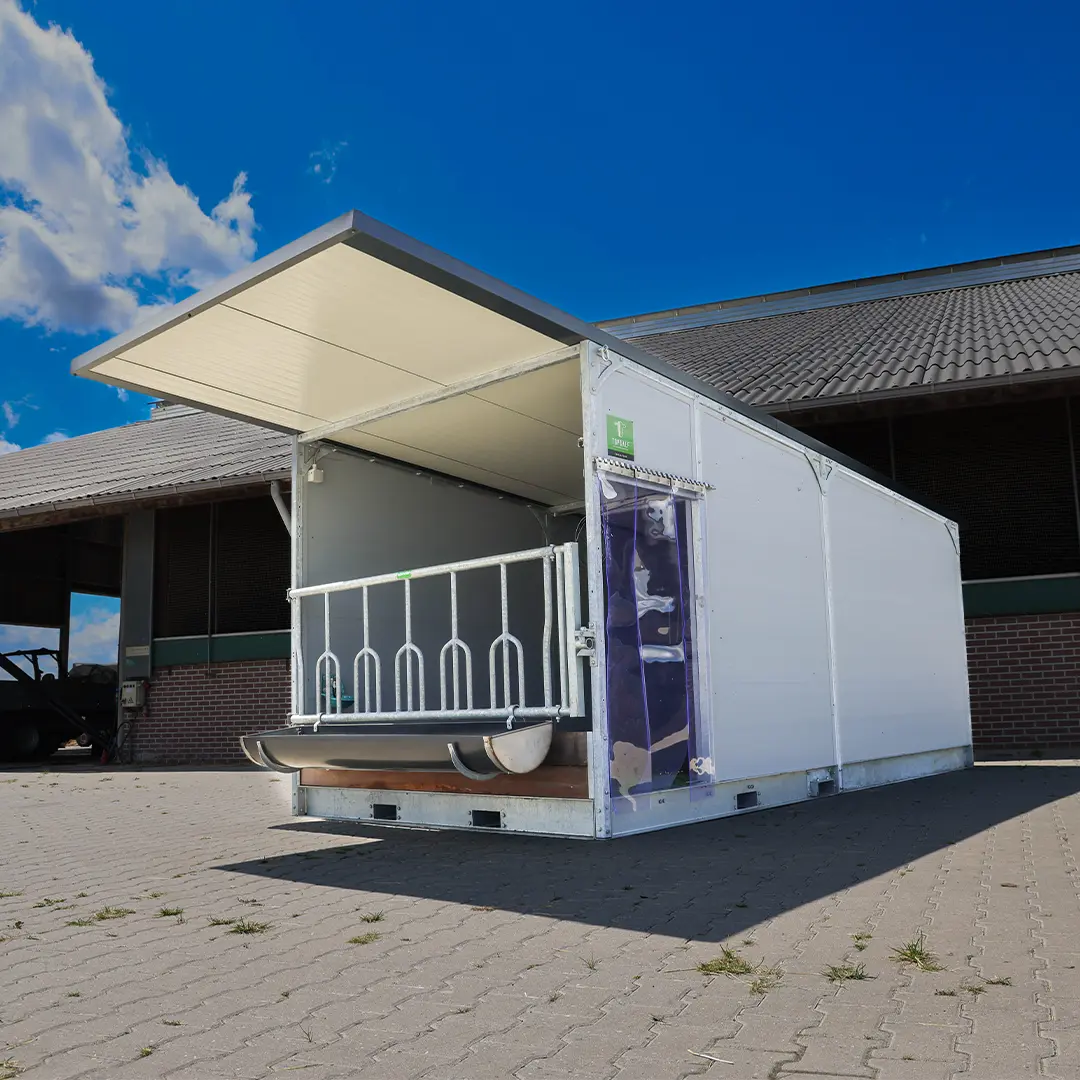
Calf hut
Spacious and large for larger groups
-
Optional accessories:
- With outlet & drinking fence
- According to Bioland guidelines
- CAT3000® hose ventilation
- With chassis and manure flap
FAQ – Frequently asked questions about calf pens & calf hutches
Why are calves kept in individual pens?
Calves are kept in individual calf pens for the first few weeks of their lives in order to optimally protect their health. Separate housing prevents disease transmission, enables individual feeding and makes it easier to observe development, behavior and vitality. At the same time, modern calf pens promote hygiene, warmth and stress-free growing up.
What are the advantages of plastic calf pens?
How can you recognize a good calf box?
A high-quality calf box is characterized by:
- stable frame and robust walls
- Good ventilation and dry barn climate
- Safe access and stable doors
- Hygienic, removable slatted floor
- Practical feed and drinking bucket holders
- Easy cleaning and high mobility
Our Topcalf calf pens meet all these criteria and comply with German animal welfare regulations.
Outdoor or indoor - which calf box is better?
Both have advantages:
- Indoor calf pens offer constant temperatures, protection from draughts and optimum working conditions.
- Outdoor calf hutches provide fresh air, robust protection from the weather and a natural environment.
Many companies combine both systems, depending on the season and management.
How big should a calf box be?
Single calf pens must offer enough space for the calf to stand, lie down and turn around. Our models (Mono XL, Duo XXL, Trio XXL) are deliberately generously dimensioned and comply with all German regulations.
Are there calf pens for group housing?
How does the cleaning of a calf box work?
Which calf box is suitable for my farm?
That depends on:
- Herd size
- Posture strategy (individual / group)
- Stable construction or outdoor housing
- Working hours and personnel
- Mobility and cleaning requirements
We will advise you free of charge and recommend the right model for your farm – from a single box to a large calf village.
Give us a call,
We are always there for you
and advise you personally: +49 8092 853804-0,
or via our inquiry form:
For which animal species and applications is hose ventilation suitable?
We use hose ventilation for all conceivable animal species and special applications:
Cattle, sheep, goats, poultry, rabbits, pigs, horses, etc.
When designing the system, we take into account the health-safe air speed on the animal. As our systems are individually manufactured, we can cater to almost all special requests and special applications of our customers. With upstream air heaters or heat exchangers, heat-loving animal species can also be supplied with absolutely fresh air.
If your application is not listed here, simply ask us - we will find a solution. Our ventilation system can ventilate almost anything and can be configured so individually that it can be integrated almost anywhere - for example, our hose now also helps with the fresh air storage of sensitive organic cereals in high racks or with reducing humidity in the halls of a fish farm.
Can hose ventilation be combined with built-in ventilation systems?
The CAT 3000 hose ventilation system can be combined with various built-in or natural ventilation installations. If your barn already has an underfloor extraction system, for example, the system can be combined with it. Of course, the CAT 3000 can also be operated in combination with natural ventilation systems: In this case, the system can successfully compensate for seasonal differences in function - e.g. when there is no wind or no air can rise through the ridge due to the weather conditions. Please state your existing ventilation equipment in the inquiry form. We can then take these into account in your non-binding inquiry!
What does the name "CAT 3000" mean?
"CAT" is the abbreviation for "Clean Air Transport".
Does the barn ventilation have a control system?
Yes, we always equip our ventilation systems in stables with a 5-stage control system.
The ventilation output is calculated precisely for your barn and set to one level of the controller - as the "continuous operating level". In this setting, fresh air is supplied to the animals all year round. In the summer months from 25 °C, the system has an additional reserve for "summer operation". The air exchange rate can thus be increased in order to achieve an additional climate improvement in very hot weather.
What width does the hose ventilation cover?
In terms of width, the hose ventilation can supply approx. 7 meters of fresh air from the center point to both sides.
What is the maximum length of the hose ventilation?
The maximum length of the ventilation hose is approx. 50 meters. If a longer distance needs to be bridged, the system can be extended by a second system from the opposite side up to a total of 100 meters.
Depending on the ceiling height, it may also be possible to increase the diameter of the hose in order to supply fresh air to a distance greater than 50 meters. However, this option must be assessed on a case-by-case basis.
How much does a hose ventilation system cost - Price?
As every stable is a little different, we need a few details from you to make a non-binding offer. Simply complete the online inquiry form and send it off. We will send you a non-binding offer for your project within the next few days. If you are happy with our offer, one of our employees will visit you, take the dimensions of the barn and determine the position of the fan.
Can I install the barn ventilation myself?
After our quotation, the measurement and your order placement, you will receive all the individual components of the hose ventilation system. You can install these yourself using simple instructions. Once an electrician has established the power connection, the system can be put into operation immediately.
How long does the fabric of the ventilation hose last?
Our manufacturer specifies a service life of over 10 years for the material. The same material has been used in cheese dairies for over 12 years and is washed once a week for hygiene reasons.
The fabric is woven from special polyester yarn. It is washable and resistant to ammonia and harmful substances.
The air holes are laser-cut. This means that the edges are immediately fused in the cut and do not fray during washing.
Is condensation forming on the hose?
NO, condensation does NOT form on our ventilation hose.
To avoid condensation, we have opted for an air-permeable textile fabric for the hose material. As the fabric is constantly permeated with air, there is no surface on which humidity can condense.
Condensation can only form if the material of the hose is made of airtight material (e.g. airtight fabric, coated fabric, plastic film, etc.). The condensation then runs down the hose and drips off. Due to the permanent moisture, the hose quickly becomes covered in algae - as can be seen in the picture below. The picture shows a ventilation hose whose fabric has an airtight coating. You can see the water running down and dripping off. A green film of algae has formed on the top of the hose.
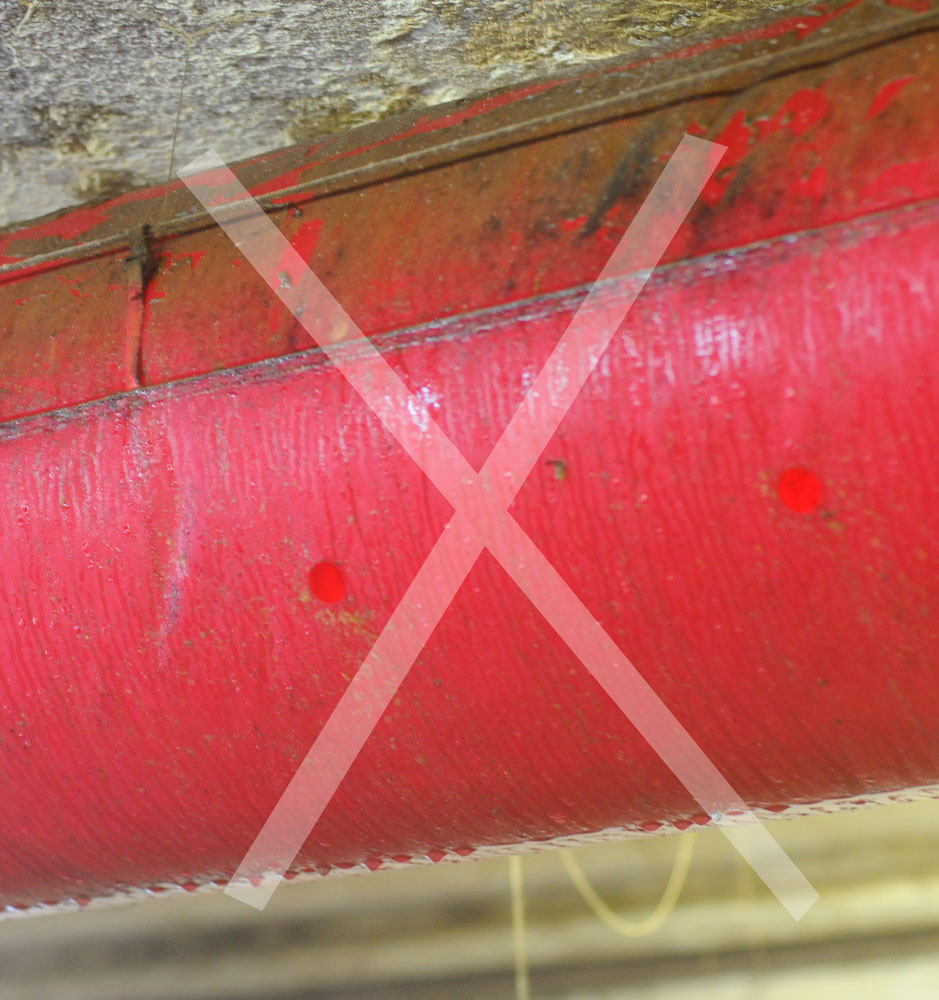 The material we use is easily permeable to air. You can therefore be sure that our ventilation hose will not "sweat" and that no condensation will form on the surface.
Wash and disinfect hose ventilation
The ventilation hose can be easily washed and disinfected. It can be divided into manageable pieces with zippers.
For effective disinfection, we recommend either washing with a disinfectant detergent in powder form in the washing machine or disinfection using an immersion bath (after prior washing).
Washing temperature: 40 degrees.
Do not wash above 40 degrees!
We offer a suitable detergent for simultaneous disinfection:
1:5 liquor ratio (ratio of laundry to water)
40g per kg capacity of the washing machine
Minimum main wash time at 40°C: 20 minutes
VAH-listed detergent for chemothermal laundry disinfection at 40°C. Excellent washing performance and stain removal.
Effectiveness: Disinfection procedure according to the Association for Applied Hygiene - VAH, the Robert Koch Institute - RKI (procedures registered for listing) and individual certificates:
Verbund für angewandte Hygiene (VAH): Bacteria (incl. MRSA, VRE, MRGN), yeasts
Robert Koch Institute (RKI) AB (registered): A: Bacteria, mycobacteria, yeasts; B: Viruses
Sporicides (full sporicidal efficacy according to Eurostandard EN 13704): Spores: Bacillus subtilis, Bacillus cereus, Clostridium difficile
Disinfection in the immersion bath
We offer a suitable disinfectant for carrying out disinfection by immersion:
Immersion bath after prior cleaning at min. 20°C, max. 40°C
Application time: 20 minutes
Dosage: 1%
Excellent microbiological efficacy (tested in accordance with EN 1276, EN 13697, EN 1650).
Free from chlorine, phosphates and aldehydes.
Microbiologically effective against:
Candida spec.
Aspergillus spec.
Enveloped viruses
Newcastle disease, paramyxovirus
Infectious bronchitis, coronavirus
Bluecomb disease, coronavirus
Infectious laryngotracheitis, herpes virus
Marek's disease, herpes virus
Classical avian influenza, orthomyxovirus
Avian leukosis, retrovirus
Avian sarcomatosis, retrovirus
Fowlpox, Poxvirus
Unenveloped viruses
Avian encephalomyelitis, picornavirus
Infectious Bursal disease /Gumboro, Birnavirus
Stunting syndrome, parvovirus
Avian adenovirosis, adenovirus
Egg drop syndrome, adenovirus
Bacteria
Mycoplasmosis: Mycoplasma species
Fowl typhus, Salmonella gallinarum pullorum
Poultry cholera, Pasteurella multoida
Enveloped viruses
Classical swine fever, Togavirus
TGE, coronavirus
Aujeszky's disease, herpes virus
Influenza, myxovirus
PRRS, Arterivirus
Vesicular stomatitis, rhabdovirus
Unenveloped viruses
Foot and mouth disease, picornavirus
Teschen disease, picornavirus
Vesicular disease, picornavirus
Vesicular exanthema, calicivirus
Parvovirosis, parvovirus
bacteria
Leptospirosis, Leptospira interrogans
Atrophic rhinitis, Bordetella/ Pasteurella species
Brucellosis, Brucella suis
Salmonellosis, Salmonella species
Dysentery, Treponema hydrodysenteria
Erysipelas, Erysipelothrix rhusiopathiae
Contagious plueropneumonia, Haemophilus pleuropneumonia
Enveloped viruses
Vesicular stomatitis, rhabdovirus
"Rinderpest", paramyxovirus
Lumpy skin disease, poxvirus
Rift valley fever, Bunyavirus
Bovine leukosis, retrovirus
Infectious rhinotracheitis/vulvovaginitis (IBR-IPV), herpes virus
Mucosal disease, Togavirus
Unenveloped viruses
Bovine adenovirus, adenovirus
Foot-and-mouth disease, picornavirus
Bacteria
Contagious pleuropneumonia, Mycoplasma mycoides
Mycoplasma mastitis, Mycoplasma bovis
Leptospirosis, Leptospira interrogans
Brucellosis, Brucella species
Genital camphylobacter, Camphylobacter species
Dermatophilosis, Dermathophilus congolensis
Hemorrhagic septicemia, Pasteurella multacida
Salmonellosis, Salmonella dublin
Mastitis agalactica, Steptococcus agalactica
Enveloped viruses
Plague of small ruminants, morbillivirus
Rift valley fever, Bunyavirus
Nairobi sheep disease, Bunyavirus
Smallpox, poxvirus
Cold sores, poxvirus
Maedi / Visna, Retrovirus
Pulmonary adenomatosis, enveloped viruses
Unenveloped viruses
Foot-and-mouth disease, picornavirus
Bluetongue disease, reovirus
Bacteria
Dermatophilosis, Dermathophilus congolensis
Brucellosis, Brucella species
Contagious agalactica, Mycoplasma agalactica
Salmonellosis, Salmonella abortus ovis
Listeriosis, Listeria
Atrophic rhinitis, Pasteurella multocida
Enveloped viruses
Vesicular stomatitis, Rhabdovirus
Infectious anemia, Retrovirus
Equine influenza, Orthomyxovirus
Rhinopneumonitis, Herpesvirus
Smallpox, Poxvirus
Equine viral arteritis, Togavirus
Equine encephalomyelitis (WEE, VEE, EEE), Togavirus
Non-enveloped viruses
African horse sickness, Reovirus
Bacteria
Dermatophilosis, Dermatophilus kongolensis
Contagious metritis, Taylorella equigentalis
Glandes, Pseudomonas mallei
Equine salmonellosis, Salmonella abortus equi
Strangles, Streptococcus equi
Mellioidosis, Pseudomonas pseudomalei
We will be happy to make you an offer.
We will be happy to send you the washing instructions and washing order on request.
How does the installation work?
We supply you with all the components you need to install the fan, the weather protection hood (optional), the control unit and the ventilation hose. The fan and cable suspension are easy to install.
As a wall opening in load-bearing walls interferes with the statics of the house, we always recommend consulting a structural engineer. If necessary, installing a lintel over the opening can solve the problem easily. If nothing stands in the way of the breakthrough, it can be carried out manually or with a core drill (by a specialist company).
Once the opening has been created, the matching wall duct supplied is fitted flush into the wall. It seals the masonry cleanly and prevents air turbulence in front of the fan thanks to its smooth surface.
The fan and control unit may only be connected to the power supply by an electrician.
The fan and the cable suspensions are attached with dowels. Pay attention to the routing of cables (electricity/water/gas etc.)!
Once everything is ready, the ventilation hose can simply be hooked into the tensioned ropes using clips. The hose is connected to the fan with a hose clip. Once all the components have been installed, the system can be put into operation.
What is the process from planning to installation?
Procedure:
- You will receive a non-binding offer from us after submitting the inquiry form.
- If you are happy with our offer, we will come to you to discuss and measure the structural situation on site. We will add the cost of this to the purchase price when you buy the hose ventilation system.
- Once we have received your order, we manufacture your individual ventilation duct exactly according to our measurements. We also put together suitable fans, wall ducts and installation materials.
- You will be informed of the dimensions of the wall opening for the structural preparation.
- After testing the hose aeration system at our premises, during which we check and readjust the function and flow rate of the air at animal height, among other things, we pack and ship your CAT 3000 hose aeration system.
- The enclosed installation instructions make it easy for you to install the hose ventilation system.
- The hose ventilation is connected by an electrician.
- And the CAT 3000 hose ventilation system can be put into operation immediately.
What colors is the stable ventilation hose available in?
The standard color of the hose ventilation is light grey. For colorful accents, it can also be supplied in red, yellow, blue or black.
Does the hose ventilation run all year round?
Yes, the hose ventilation runs constantly all year round, 24 hours a day, 365 days a year. Only on very hot days in summer can the air exchange rate be gradually increased on the control unit for an additional cooling effect.
Does the hose ventilation also work in winter?
Yes, in any case. As all barn doors and openings are often closed in winter, barns without ventilation have a high level of humidity (recognizable by condensation on the windows). The humidity is greatly reduced by the CAT3000 hose ventilation system. Clean, dry fresh air always flows into the barn. This is always healthier than damp stable air enriched with germs and ammonia. In addition, lying comfort is increased by drier straw.
Our ventilation hose is made of slightly air-permeable fabric. This prevents condensation forming on and in the hose - especially in winter.
How long does it take to install the hose ventilation?
With a system of 15 meters, the installation of the barn ventilation takes approx. 5-6 hours (without wall breakthrough and electrical installation).