
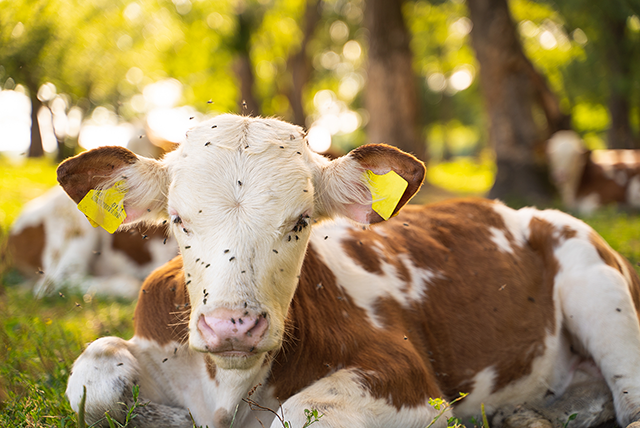
FIGHTING FLIES IN THE STALL
A plague of flies in the barn is not just annoying. Insects like flies can significantly impair the well-being and performance of animals and transmit numerous diseases.
Flies transmit a variety of pathogens, including bacteria such as staphylococci, coliforms, yeasts, viruses and worm eggs. They can also cause specific diseases such as fly maggot disease (myiasis), where flies lay their eggs in wounds and the hatching maggots damage the tissue .
They can cause conjunctivitis by introducing bacteria into the animal’s conjunctival sac. Other infections are also transmitted by flies, for example through their saliva, droppings or when licking and biting .
The constant annoyance caused by flies leads to stress, restlessness and discomfort in the animals. This can lead to reduced milk and fattening yields and have an overall negative impact on animal welfare .
Stinging fly species such as the calf stinger or horse flies cause painful stings, which can not only lead to pain but also to panic and injuries. Open wounds are in turn entry points for further infections .
Flies reproduce extremely quickly – a single fly can produce hundreds of thousands of offspring in just a few weeks. Without control, this can become a real plague and the health risk for the animals increases accordingly .
Typical consequences of a fly infestation
- Transmission of diseases such as conjunctivitis, mastitis or fly maggot disease (myiasis) .
- Stress and restlessness, which leads to lower feed intake and declining milk yield .
- Open wounds caused by fly bites, which encourage further infections.
- Rapid reproduction: A single fly can produce hundreds of thousands of offspring in just a few weeks .
Fly prevention: hygiene and stable climate
Effective fly control starts with barn hygiene:
In addition to regular basic cleaning in spring (removes overwintering flies and breeding sites), drybedding is particularly helpful and the removal of feed residues to prevent the development of fly larvae, especially in calf pens and deep litter areas. The hose ventilation ensures dry bedding and clean stable areas through a targeted supply of fresh air, which effectively inhibits the development of fly larvae and thus reduces fly infestation in the stable in the long term.
Flies avoid draughts – and this is precisely where modern tube ventilation comes in . This is because the targeted, even supply of fresh air in the barn significantly worsens the conditions for flies:
- Even air circulation makes it difficult for flies to land and multiply.
- Reduced moisture ensures dry bedding and fewer breeding grounds for fly larvae .
- Fewer germs: The germ load in the barn is noticeably reduced by the ventilation – this protects particularly sensitive calves and improves animal health overall.
- Less stress: Healthy, calm animals are less attractive to flies and perform better .
Conclusion: Fly control starts with the barn climate
Flies are a building block for animal health and profitability in dairy cattle and calf husbandry. In addition to consistent hygiene, CAT3000® hose ventilation ensures an optimum barn climate: it reduces flies and germs in the long term, improves animal welfare and increases performance – without the need for additional chemicals.
Would you like to reduce the fly load in your company? Contact us for individual advice on ventilation solutions!

Give us a call,
We are always there for you
and advise you personally: +49 8092 853804-0,
or via our inquiry form: