HEAT STRESS: Why Cows Stand Still in the Summer
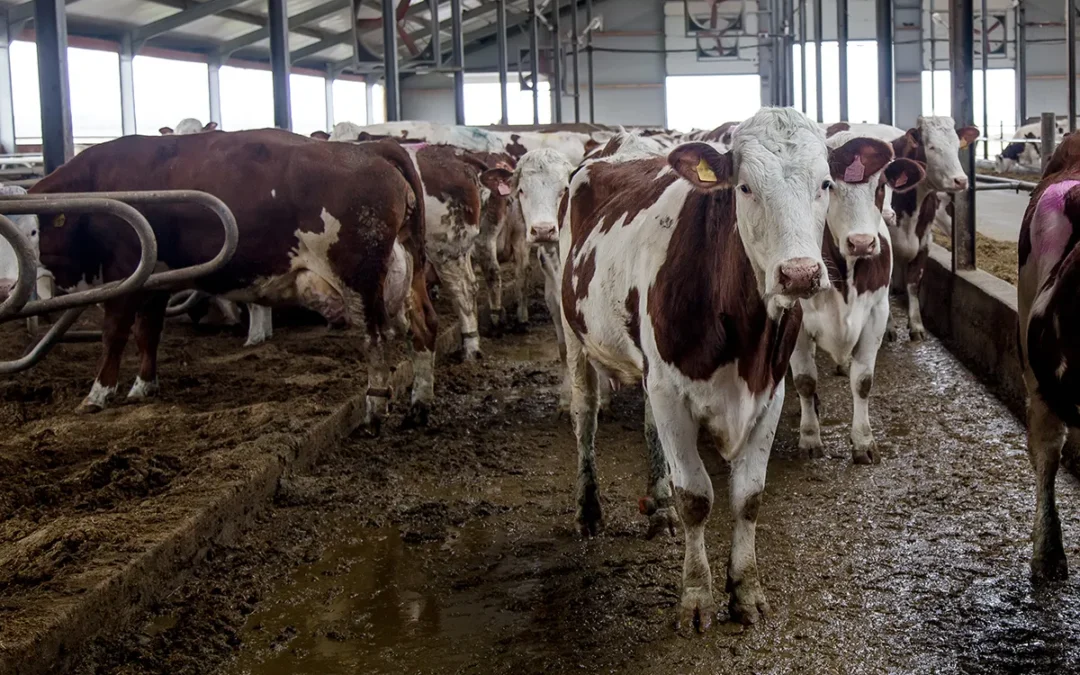
Many farmers see this happen every year: As soon as temperatures rise, the cows stand up much more often—even when there are enough lying stalls available.
This behavior is no coincidence; rather, it is a typical sign of heat stress in cows. If you look closely, you’ll quickly see that the herd is actively trying to cope with the conditions in the barn.
You can see that they’re standing, but why, exactly? What’s better about standing than lying down?
Thermoregulation: How Cows Cope with Heat
Cows are relatively sensitive to heat. Even at temperatures around 20°, they enter a range where—especially when combined with high humidity—their natural cooling mechanisms reach their limits. Unlike humans, cows have a limited ability to sweat. Heat dissipation occurs primarily through:
– Respiration (increased respiratory rate)
– Heat loss through the body’s surface
– Behavioral factors such as changing location and body posture
And this is exactly where standing comes into play.
So why do cows stand still when it’s hot?
Standing more often serves several purposes at once:
1. Improved heat dissipation
When lying down, cows have extensive contact with the cubicle—which is often an additional source of heat. When standing, they reduce contact with the warm lying surface and release more heat into the environment.
2. Utilizing Air Movement
Cows deliberately position themselves where there is airflow—for example, near doors, windows, or fans. When standing, they are better able to take advantage of this airflow.
3. Reducing Metabolic Load
Spending less time lying down often means less rumination—while this is generally a negative thing, it does reduce internal heat production in the short term.
This means: The cow isn’t standing there “just like that”—she’s reacting to the climate in her barn. Standing still is often the first of several visible signs:
– Increased respiratory rate (panting)
– Significantly higher water intake
– Decreased feed intake
– Restlessness in the herd
– Increased tendency to stand in groups in well-ventilated areas
Such changes should always be taken seriously.
What are the consequences of heat stress?
Heat stress has a direct impact on performance, health, and economic efficiency—often with a time lag:
– Reduced food intake leads to a loss of energy
– Decline in milk production
– Reduced fertility
– Higher risk of metabolic disorders
– Increase in hoof problems due to high stress caused by prolonged periods of standing
Improving the Barn Environment: The Key Factor
If cows are standing more often, it’s worth taking a closer look at the barn climate. It’s not just the temperature that matters, but the unique combination of factors specific to each barn:
– air velocity
– air distribution
– humidity
– heat buildup in the barn
Finally, Fresh Air in the Barn—Why Airflow Is Crucial
Effective cooling is not achieved simply by having “more air,” but rather through targeted air movement in the animal area. In practice, the problem often lies in the fact that air does not reach the animals where they are. Airflow is often uneven or concentrated in specific areas, resulting in dead zones in the barn. For the cow, however, it makes a big difference whether she actually feels air moving against her body.
Customized Heat Stress Solutions for Dairy Barns
From our experience, we know that every barn operates differently.
That is why heat stress cannot be resolved with standard solutions. The key is planning tailored to the specific operation:
– Consideration of barn design and orientation
– Analysis of airflow within the barn
– Adaptation to livestock numbers and usage
– Uniform and precise air distribution
Modern systems such as ductless ventilation allow fresh air to be introduced into the barn in a targeted and uniform manner—regardless of external conditions.
Clinical Observation: Early Detection Rather Than Reacting Later.
Cows often show signs of problems with the barn environment earlier than any assessment would indicate. When the animals start spending more time standing still, that’s a clear sign. Responding early can significantly reduce losses in milk production and health problems.
If you’d like, we can take a look at your barn together and show you which solutions make sense for your situation.
Give us a call,
We are always there for you
and advise you personally: +49 8092 853804-0,
or via our inquiry form: